Research
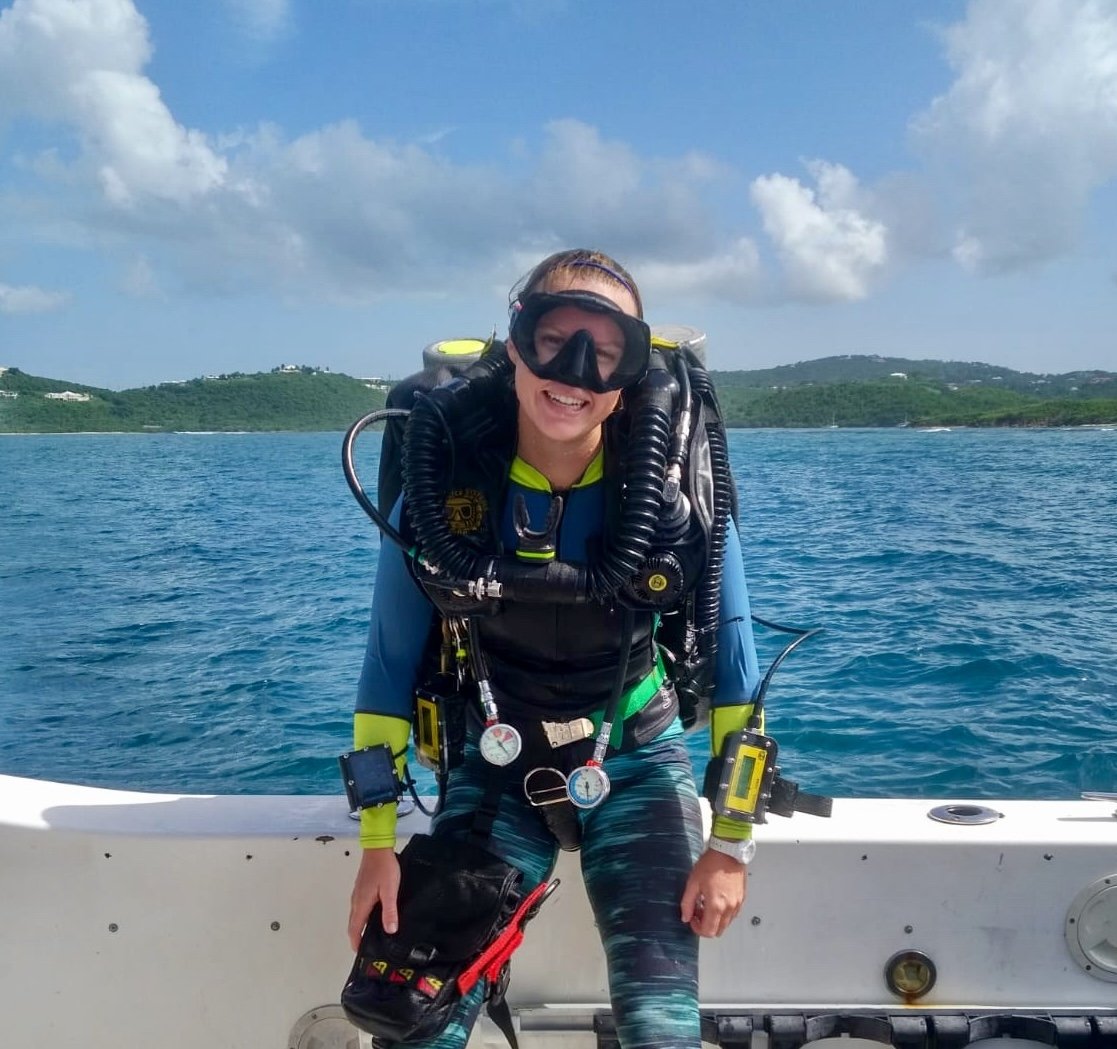
My research interests center around mesophotic fish ecology. I’ve worked on projects studying spawning aggregations, community ecology, movement ecology, and more, using acoustic telemetry, visual surveys, and more.
Selected Publications
-
![a lionfish hovers over a coral reef]()
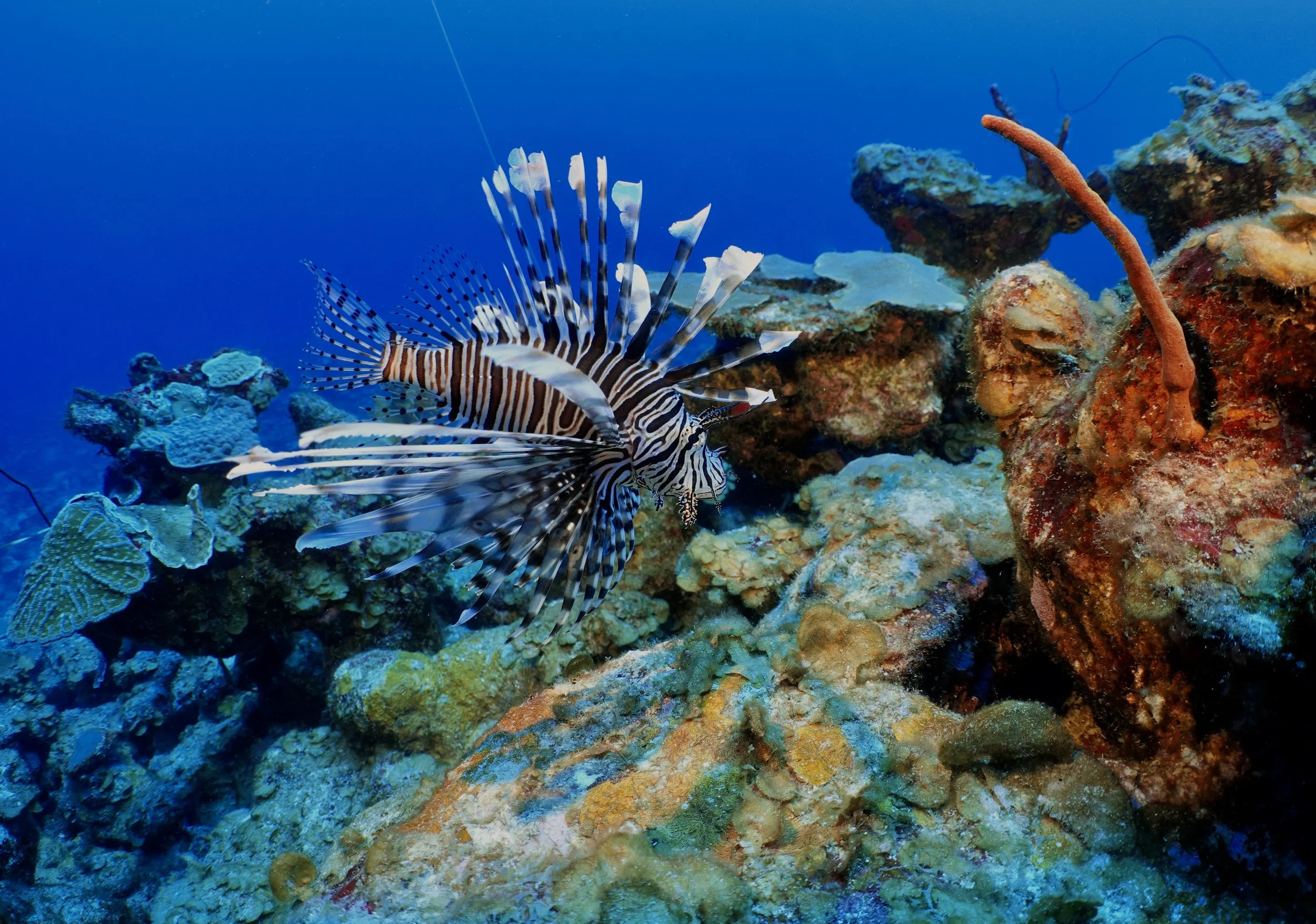
Mesophotic lionfish
“Across 10 years of monitoring, significantly higher densities of lionfish were observed on mesophotic reefs as compared to nearshore and offshore reefs in the USVI… The persistence of lionfish in mesophotic reef habitats in the USVI suggests that they could be impacting these environments, and future studies and management efforts should focus on identifying, quantifying, and mitigating those effects.”
-
![Underwater scene showing scuba divers exploring a vibrant coral reef with various types of corals and a lionfish.]()
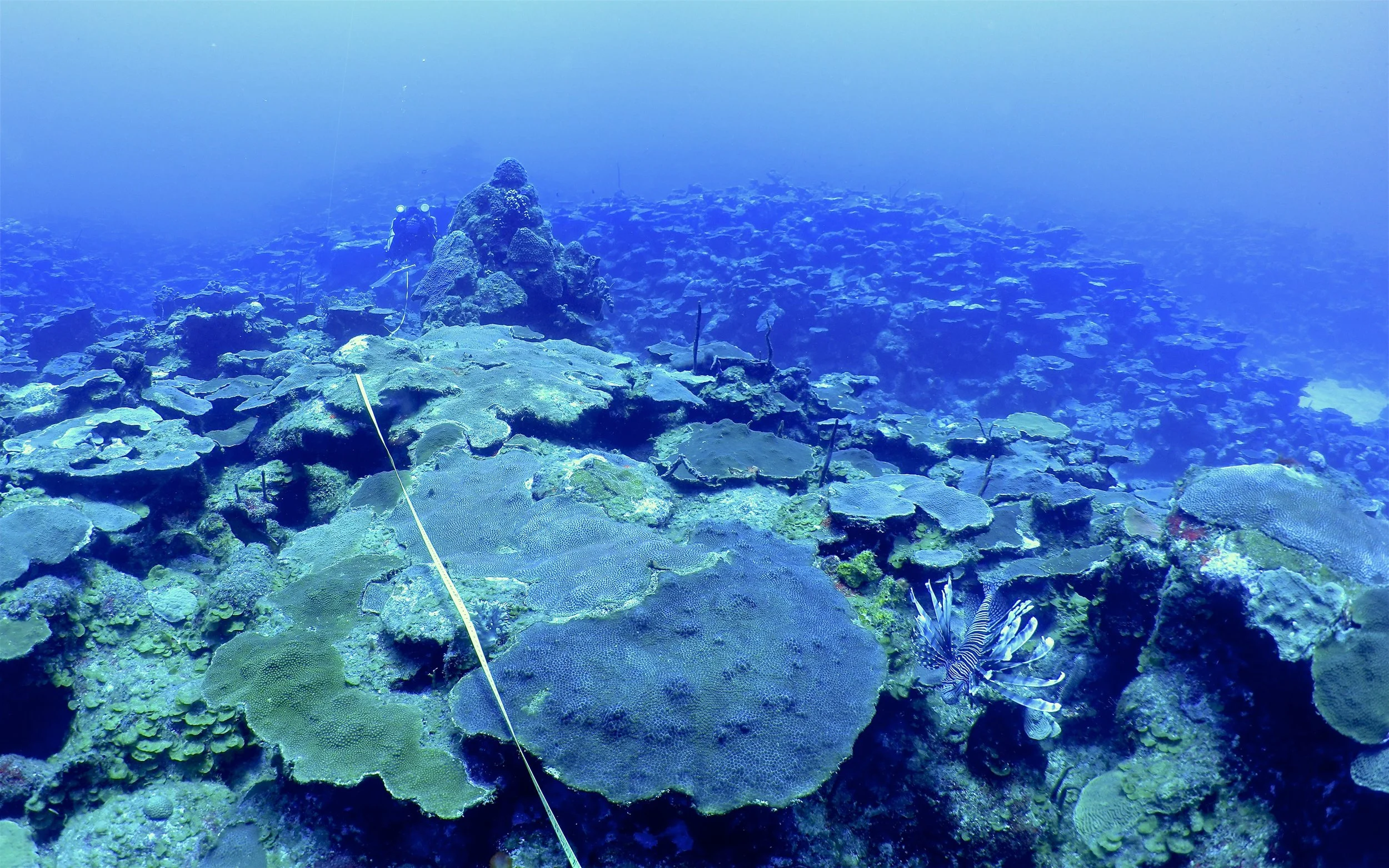
USVI fish communities
“Some commercially important species occurred more frequently and in larger sizes on deeper reefs, suggesting that mesophotic reefs shelter more fisheries resources, although they are less commonly sampled in visual census programs.”
-
![Line graphs showing the Chesson Index over days after full moon and time of day, displaying peaks and variations in data.]()
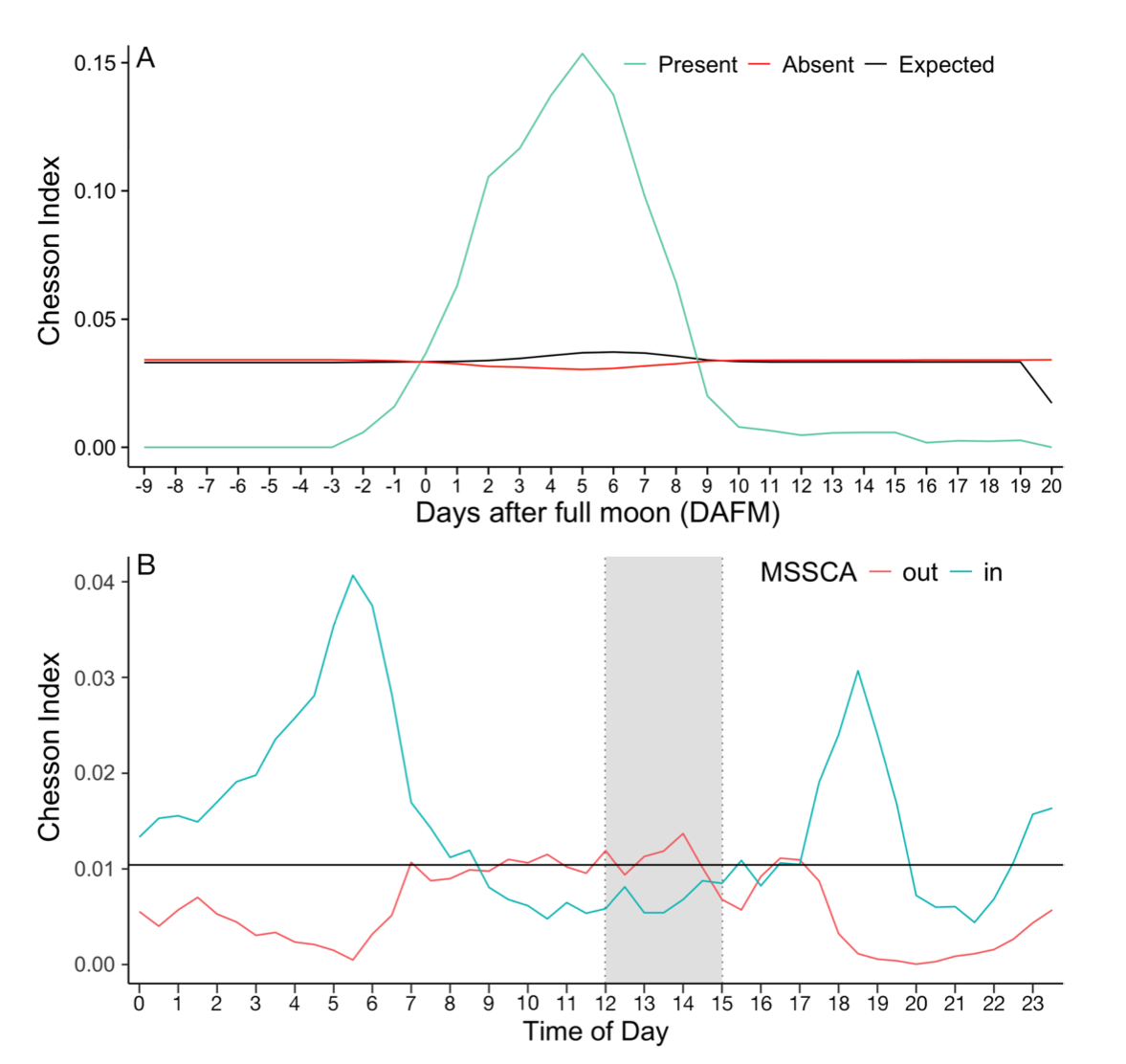
Mutton snapper spawning
“To improve management of the L. analis FSA, we recommend re-evaluating the MSSCA boundaries and timing, improving enforcement, and engaging fishers and the community through co-management efforts.”
-
![Bar graph comparing density (Ind/177m2) between DCRMP and NCRMP across four fish species: Queen Triggerfish, Red Hind, Yellowtail Snapper, and Stoplight Parrotfish. The Stoplight Parrotfish shows the highest density in DCRMP, with significant differences marked by an asterisk.]()
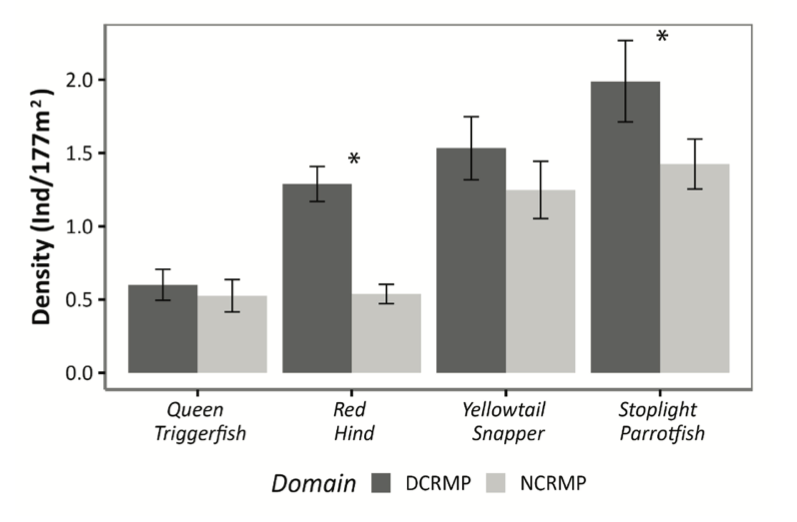
Expanding monitoring deeper
“Domain-wide density and length comparisons between surveys showed similar or statistically higher abundances and larger lengths for fishes at deeper depths (>30 to 50 m). These results highlight the importance of surveying the entire insular shelf in St. Thomas and St. John, US Virgin Islands for fisheries management applications.”
-
![Diagram of a coral reef food chain showing fish and a turtle, with a focus on sampling of Gamberdiscus from substrate using FISH probes and analyzing the community composition of species.]()
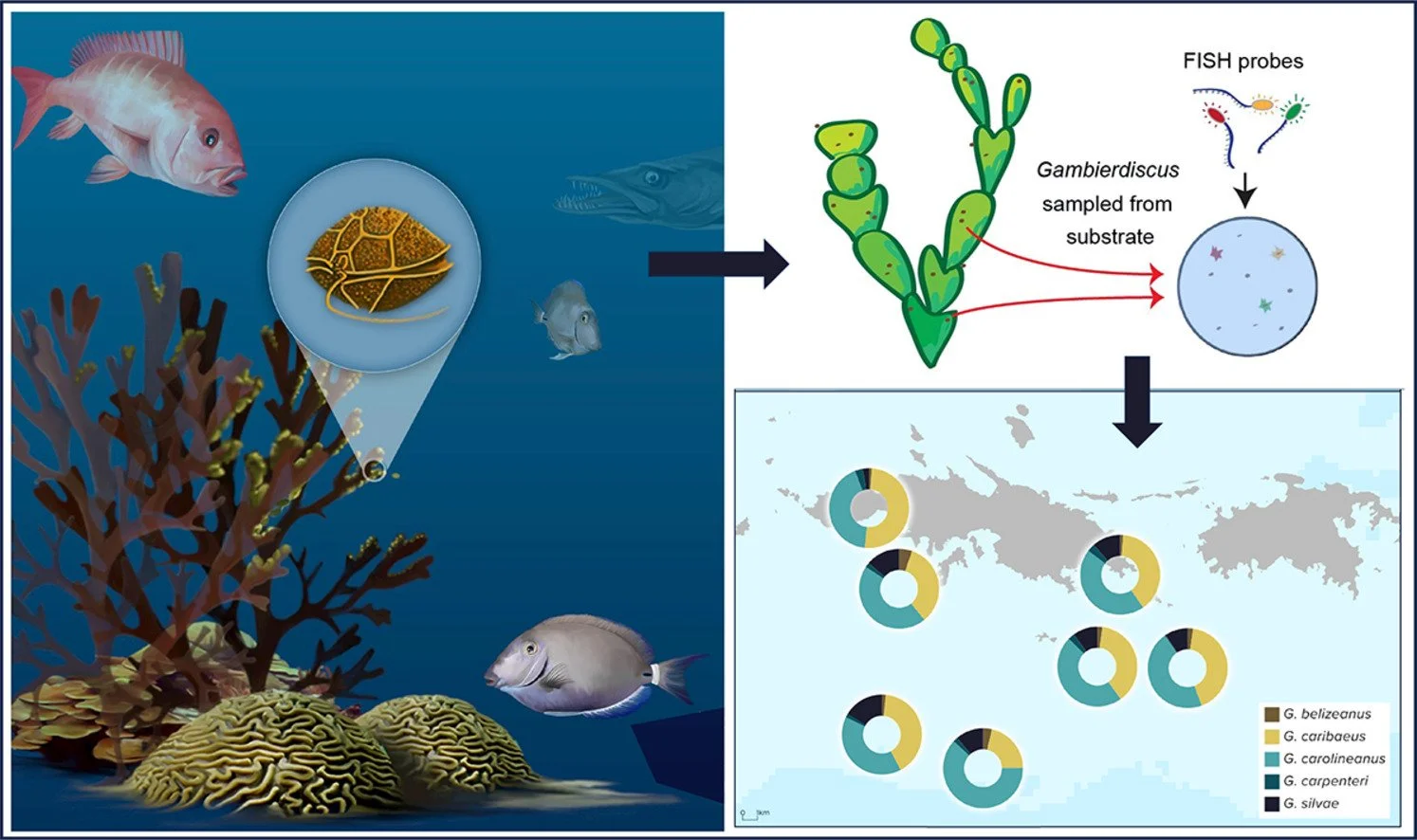
Ciguatera poisoning
“The investigation found differing community structure between St. Thomas and Florida Keys sites, driven in part by differences in the distribution of toxin-producing species G. silvae and G. belizeanus, which were present throughout sampling sites in St. Thomas but scarce or absent in the Florida Keys. This finding is significant given the high toxicity of G. silvae, and may help explain differences in fish toxicity and CP incidence between St. Thomas and Florida.”
-
![Six maps showing probability distributions of catch locations for different fish. Each map displays 50% and 95% minimum convex polygon contours, catch locations marked by triangles, and a color scale indicating BBMM probability levels, with a 1 km scale bar and north arrow.]()
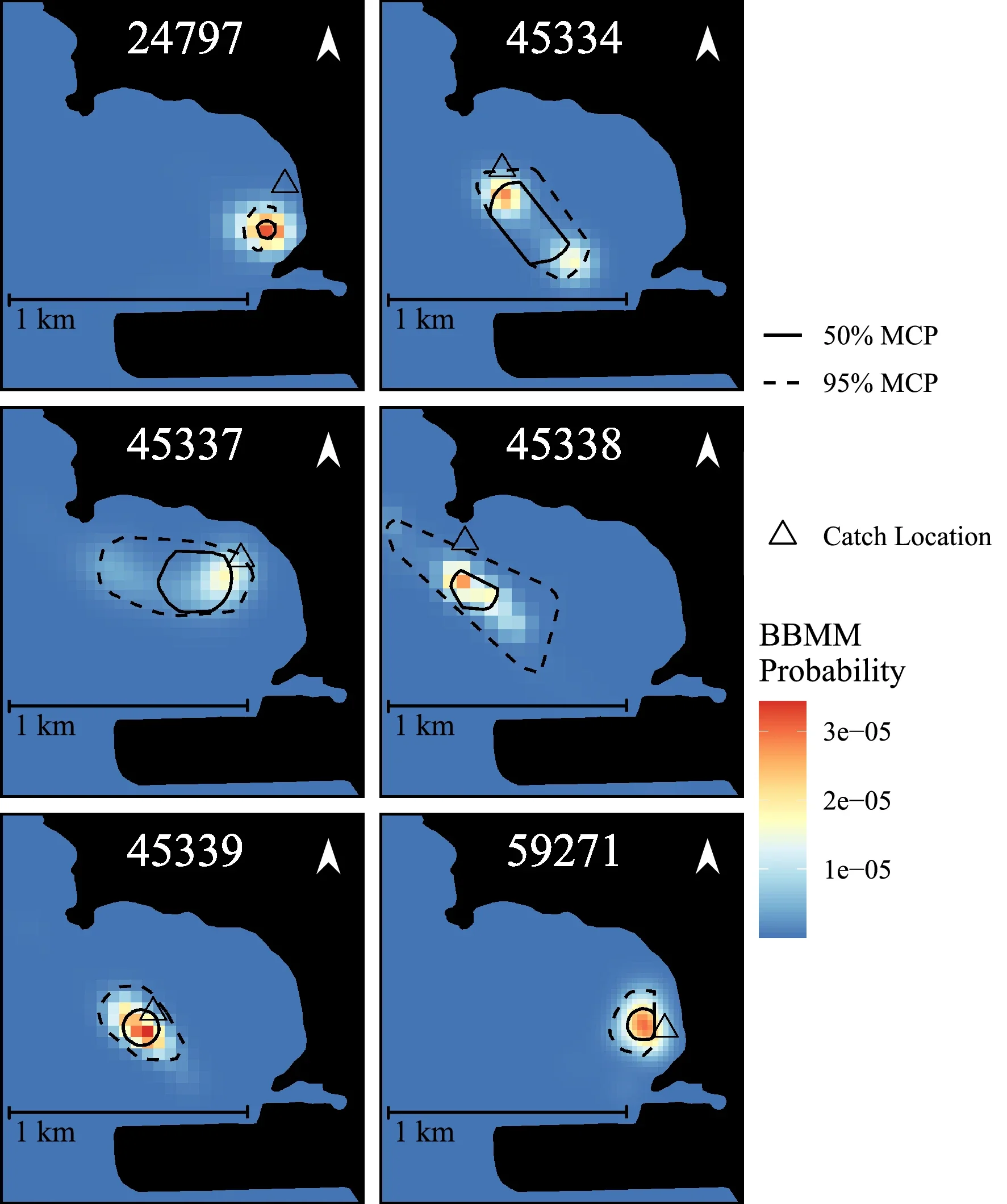
Mutton snapper home ranges
Individual L. analis showed high site fidelity to relatively small home ranges and core use areas with low overlap among individuals. Most home ranges had a habitat composition dominated by seagrass and to a lesser degree, coral reef and/or pavement. Nighttime activity spaces were distinct from but contained within daytime areas.”
-
![Bar chart depicting mean abundance across habitats for nocturnal carnivores, diurnal carnivores, and herbivores. The chart shows that nocturnal carnivores have the highest mean abundance in the 'L' habitat, while herbivores and diurnal carnivores have similar, lower abundances across habitats.]()
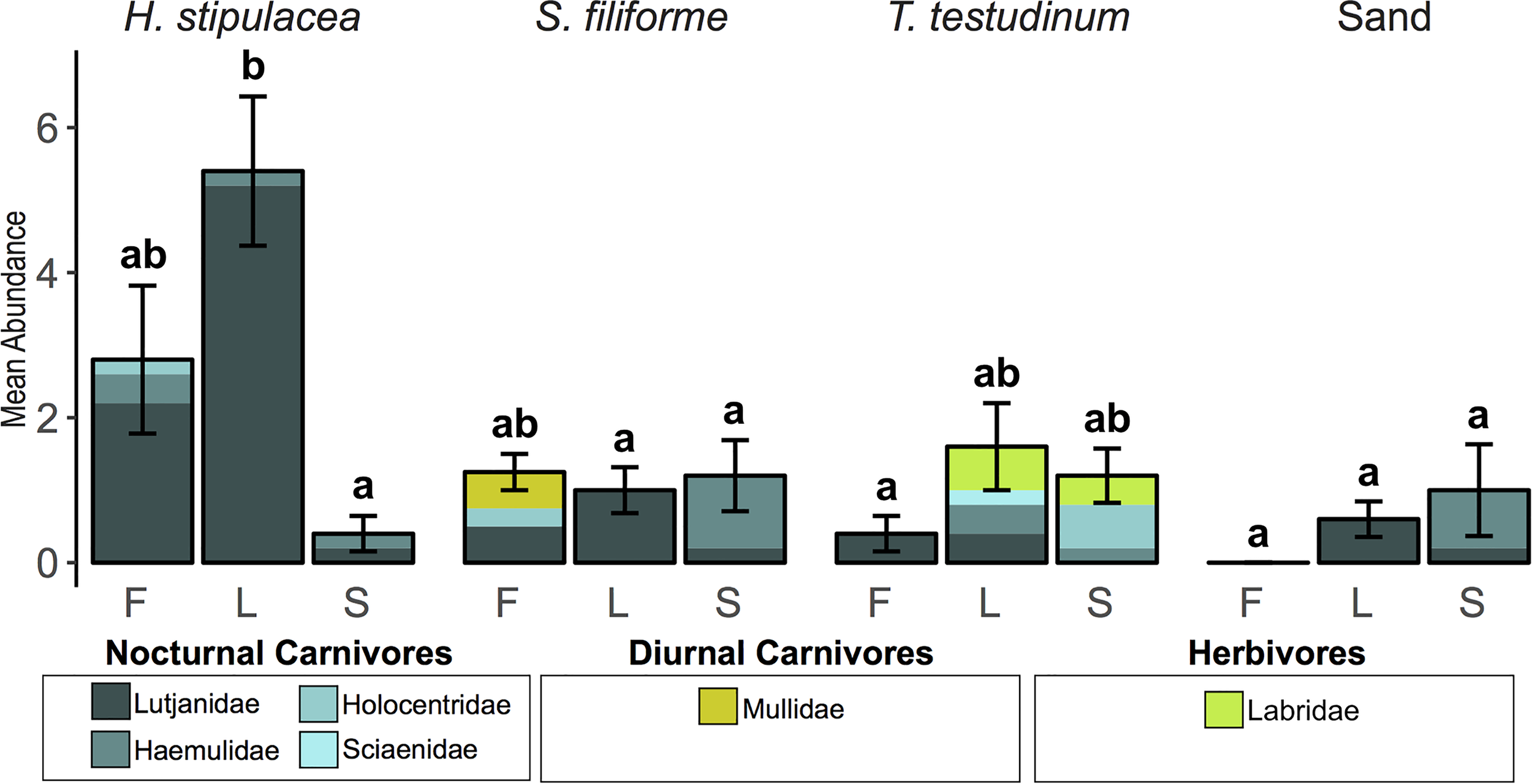
Nonnative seagrass fish communities
“These results provide evidence of reduced family diversity and altered juvenile fish assemblages in [invasive] H. stipulacea, driven by an abundance of some nocturnal carnivores and scarcity of herbivores and diurnal carnivores.”